

Brake Service and Repair
Brake Service and Repair in Mukwonago, WI
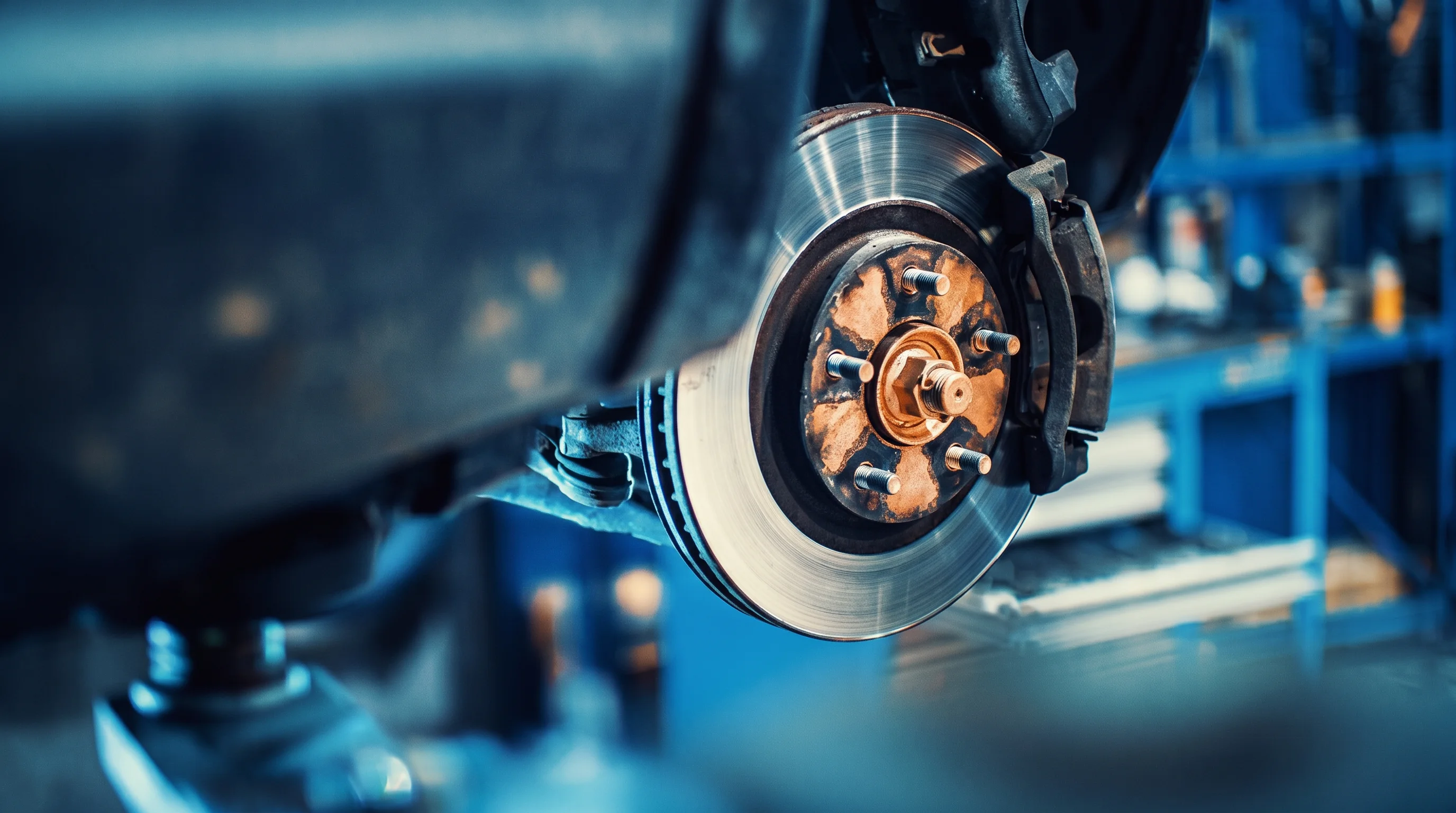
Your brakes should be checked by a professional on a regular schedule. AAA notes that automotive experts recommend a mechanic inspect brakes at least every six months (AAA), and the Car Care Council recommends a brake check at least once a year (Car Care Council). An easy way to stay on track is to have them inspected during other routine maintenance, such as an oil change or tire rotation (Big O Tires).
Don't wait for your next appointment if you notice a warning sign. The Car Care Council lists the vehicle pulling to the left or right, odd noises when you brake, an illuminated brake warning light, brake grabbing, low or hard pedal feel, vibration, and squealing (Car Care Council).
The information on this page is provided for general informational purposes only and reflects manufacturer specifications believed accurate at the time of publication. Specifications, capacities, part numbers, and service recommendations are subject to change and may vary by model year, trim, and configuration. Always confirm the correct parts, fluids, and specifications against your vehicle's owner's manual before servicing. Consult a certified technician for service specific to your vehicle.
Where Can You Get Brake Service in Mukwonago?
Lynch Mukwonago operates three service centers in Mukwonago, and each works on its own brands. Choose the store that services your vehicle and book online.
| Service Center | Address | Service Phone |
|---|---|---|
| Lynch Chrysler Dodge Jeep Ram | 282 E Wolf Run, Mukwonago, WI 53149 | 262-684-1312 |
| Lynch Chevrolet of Mukwonago | 280 E Wolf Run, Mukwonago, WI 53149 | 262-368-1052 |
| Lynch Ford of Mukwonago | 1015 Main St, Mukwonago, WI 53149 | 262-368-5135 |
Service hours are the same at all three locations:
| Day | Service Hours |
|---|---|
| Monday–Thursday | 7:30 AM – 5:30 PM |
| Friday | 7:30 AM – 5:00 PM |
| Saturday | 8:00 AM – 1:00 PM |
| Sunday | Closed |
For a broader look at choosing a repair shop, see our guide to auto repair and service in Mukwonago.
What Happens During a Brake Inspection?
According to the Car Care Council, a thorough brake inspection includes brake lining wear, brake fluid level, rotor thickness, the condition of hoses and brake lines, and the brake and dash warning lights, along with a test drive to detect other problems (Car Care Council).
| Component | What Technicians Check |
|---|---|
| Brake pads | Lining wear and remaining thickness (Car Care Council) |
| Rotors | Thickness, measured with a micrometer against the discard specification stamped or cast on the rotor, plus thickness variation and runout (Brake & Front End) |
| Calipers and hardware | Sticking or binding, which can cause the vehicle to pull to one side (AAA) |
| Hoses, lines, and fluid | Condition of brake hoses and lines and the brake fluid level (Car Care Council) |
| Warning lights and road test | Brake and dash warning lights, plus a test drive (Car Care Council) |
The information on this page is provided for general informational purposes only and reflects manufacturer specifications believed accurate at the time of publication. Specifications, capacities, part numbers, and service recommendations are subject to change and may vary by model year, trim, and configuration. Always confirm the correct parts, fluids, and specifications against your vehicle's owner's manual before servicing. Consult a certified technician for service specific to your vehicle.
How the Brake Pad Wear Indicator Works
Many brake pads use a small metal tab that contacts the rotor and squeals once the pad wears to about 2 mm. Others use an electronic sensor that turns on a dashboard warning light instead (Firestone Complete Auto Care). Replacing pads at that stage avoids the metal-to-metal grinding that happens when the pads wear completely through (DRiV).
The information on this page is provided for general informational purposes only and reflects manufacturer specifications believed accurate at the time of publication. Specifications, capacities, part numbers, and service recommendations are subject to change and may vary by model year, trim, and configuration. Always confirm the correct parts, fluids, and specifications against your vehicle's owner's manual before servicing. Consult a certified technician for service specific to your vehicle.
Brakes and Driver-Assistance Features
Automatic emergency braking systems apply the vehicle's brakes automatically in time to avoid or reduce the severity of an impending forward crash (NHTSA). Because these systems work through your vehicle's brakes, routine brake maintenance supports them too.
Driver-assist and safety systems are supplemental aids and are not a substitute for safe, attentive driving. Their effectiveness depends on weather, road, and traffic conditions and other factors. Always obey traffic laws and stay attentive to the road. See your owner's manual for system details and limitations.
Brake Warning Signs and What They Usually Mean
| Warning Sign | What It Often Points To |
|---|---|
| High-pitched squeal on most stops | The pad wear indicator contacting the rotor; the pads are nearing replacement (Firestone Complete Auto Care) |
| Grinding or growling | Pad material worn through, with metal grinding against the rotor (DRiV) |
| Pedal pulsation or steering shimmy | Rotor thickness variation, the major cause of pedal pulsation (Brake & Front End) |
| Pulling to one side | Uneven braking, often from a sticking caliper or restricted brake hose (AAA) |
| Soft or spongy pedal | Vapor pockets from overheated, moisture-contaminated brake fluid, or a leak (The BRAKE Report) |
The information on this page is provided for general informational purposes only and reflects manufacturer specifications believed accurate at the time of publication. Specifications, capacities, part numbers, and service recommendations are subject to change and may vary by model year, trim, and configuration. Always confirm the correct parts, fluids, and specifications against your vehicle's owner's manual before servicing. Consult a certified technician for service specific to your vehicle.
How Often Should Brake Fluid Be Replaced?
Brake fluid replacement intervals vary by manufacturer and model, so your owner's maintenance schedule is the reference to follow (Cars.com). Current Chevrolet maintenance schedules for models such as the Silverado, for example, call for replacing the brake fluid at 45,000 miles or three years (House Chevrolet) (Jake Sweeney Chevrolet). Your service advisor can confirm the interval for your vehicle.
The information on this page is provided for general informational purposes only and reflects manufacturer specifications believed accurate at the time of publication. Specifications, capacities, part numbers, and service recommendations are subject to change and may vary by model year, trim, and configuration. Always confirm the correct parts, fluids, and specifications against your vehicle's owner's manual before servicing. Consult a certified technician for service specific to your vehicle.
Why Brake Fluid Condition Matters
Common DOT 3 and DOT 4 brake fluids are hygroscopic, meaning they draw moisture from the air. That moisture lowers the fluid's boiling point. Under heavy braking, heat can boil the fluid into vapor pockets. Vapor compresses where fluid doesn't, which causes a low, spongy pedal and longer stopping distances (The BRAKE Report).
Moisture also leads to corrosion. Repairs can get expensive when old fluid corrodes calipers, brake lines, and parts in the anti-lock brake system (The BRAKE Report). Having the fluid checked at each inspection helps catch breakdown early.
The information on this page is provided for general informational purposes only and reflects manufacturer specifications believed accurate at the time of publication. Specifications, capacities, part numbers, and service recommendations are subject to change and may vary by model year, trim, and configuration. Always confirm the correct parts, fluids, and specifications against your vehicle's owner's manual before servicing. Consult a certified technician for service specific to your vehicle.
What Makes Brake Repairs Cost More?
The biggest factor is waiting too long. When pads wear through, metal grinds against the rotor (DRiV), and replacing pads before that point keeps the rotors from being damaged as well (Big O Tires). A rotor that reaches its discard thickness has to be replaced (Brake & Front End).
| Factor | Why It Adds Work |
|---|---|
| Corrosion from road salt | Salt corrodes brake lines and hardware, and NHTSA advises replacing corroded brake lines (NHTSA) |
| Sticking calipers | A sticking caliper causes uneven braking and may need repair or replacement (AAA) |
| Electronic parking brake | The rear caliper pistons must be retracted with a scan tool or the vehicle's service mode before new pads can be installed (Tomorrow's Technician) |
| Pad material | Ceramic and semi-metallic pads differ in performance and price (see below) (AAA) |
The information on this page is provided for general informational purposes only and reflects manufacturer specifications believed accurate at the time of publication. Specifications, capacities, part numbers, and service recommendations are subject to change and may vary by model year, trim, and configuration. Always confirm the correct parts, fluids, and specifications against your vehicle's owner's manual before servicing. Consult a certified technician for service specific to your vehicle.
Ceramic vs. Semi-Metallic Brake Pads
| Attribute | Ceramic Pads | Semi-Metallic Pads |
|---|---|---|
| Noise | Quieter | Can be noisier |
| Brake dust | Less dust | Heavier, darker dust |
| Heat and heavy loads | Suited to everyday driving | Better suited to towing and hauling |
| Rotor wear | Gentler on rotors | More abrasive on rotors |
| Upfront cost | Generally higher | Generally lower |
The information on this page is provided for general informational purposes only and reflects manufacturer specifications believed accurate at the time of publication. Specifications, capacities, part numbers, and service recommendations are subject to change and may vary by model year, trim, and configuration. Always confirm the correct parts, fluids, and specifications against your vehicle's owner's manual before servicing. Consult a certified technician for service specific to your vehicle.
For a model-specific example, see our Ford F-150 brake maintenance guide.
Common Questions About Brake Service in Mukwonago
Why do my brakes squeal when I first drive in the morning?
Overnight moisture can leave a thin layer of surface rust on the rotors. The pads scrape it off in the first few stops, and the noise usually goes away (CRC Industries). If the squeal continues throughout your drive, have the brakes inspected.
Can I replace just the brake pads without replacing the rotors?
Often, yes. Every rotor has a minimum, or discard, thickness, and a rotor should be replaced once it reaches that dimension (Brake & Front End). If the rotors are above that specification and free of excessive thickness variation and runout, new pads can go on. A technician measures the rotors with a micrometer to decide.
What causes the steering wheel to shake when I brake?
Rotor thickness variation, a lack of parallelism between the rotor's two braking surfaces, is the major cause of pedal pulsation and steering wheel shimmy under braking (Brake & Front End). Excessive runout, or rotor wobble, can cause that variation over time.
How does winter road salt affect my brakes?
NHTSA has linked road salt to brake-line corrosion and urged drivers in salt-belt states, including Wisconsin, to wash the vehicle's undercarriage regularly through the winter and have the brake system professionally inspected for corrosion (NHTSA). The advisory focused mainly on vehicles from the 2007 model year and older (WISN 12). Our Wisconsin winter vehicle prep guide covers more cold-weather checks.
What is the difference between ceramic and semi-metallic brake pads?
Ceramic pads run quieter, produce less dust, and are gentler on rotors. Semi-metallic pads handle heat and heavy loads like towing and hauling better, but they are noisier and dustier (AAA). The right choice depends on your vehicle and how you drive it.
The information on this page is provided for general informational purposes only and reflects manufacturer specifications believed accurate at the time of publication. Specifications, capacities, part numbers, and service recommendations are subject to change and may vary by model year, trim, and configuration. Always confirm the correct parts, fluids, and specifications against your vehicle's owner's manual before servicing. Consult a certified technician for service specific to your vehicle.
Schedule Brake Service at Lynch Mukwonago
If you notice brake noise, a soft pedal, or vibration when you stop, have it checked promptly. Our three Mukwonago service centers handle brake inspections, pad and rotor service, and brake fluid service. Pick the store that services your brand and book online.
Planning routine maintenance too? Combine your visit with an oil change in Mukwonago.
Disclaimers
The information on this page is provided for general informational purposes only and reflects manufacturer specifications believed accurate at the time of publication. Specifications, capacities, part numbers, and service recommendations are subject to change and may vary by model year, trim, and configuration. Always confirm the correct parts, fluids, and specifications against your vehicle's owner's manual before servicing. Consult a certified technician for service specific to your vehicle.
Driver-assist and safety systems are supplemental aids and are not a substitute for safe, attentive driving. Their effectiveness depends on weather, road, and traffic conditions and other factors. Always obey traffic laws and stay attentive to the road. See your owner's manual for system details and limitations.