

How to Winterize Your Vehicle Southeast Wisconsin
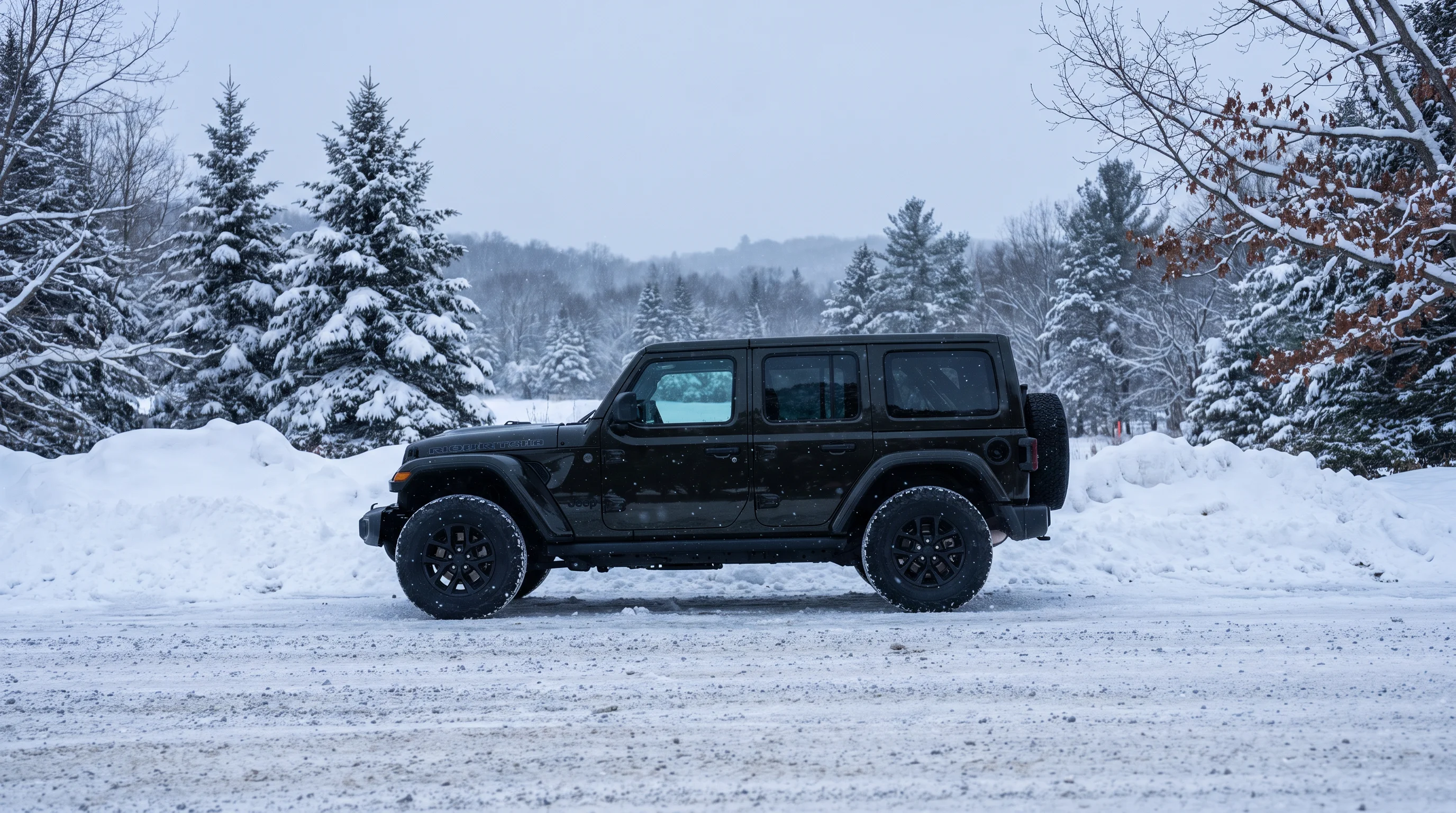
The three most important checks before southeast Wisconsin's first deep freeze are testing your battery's cold-cranking capacity, verifying your antifreeze freeze point and oil viscosity, and inspecting tire tread depth and cold inflation pressure. Together they cover the systems that fail most often when temperatures drop — starting power, engine protection, and traction — and all three can be handled in a single visit before sub-zero weather arrives.
The information in this article is general guidance and does not constitute a specific diagnostic or repair recommendation for any individual vehicle. Repair and maintenance decisions should be made in consultation with a certified technician based on the specific condition of your vehicle.
Winterizing your vehicle comes down to getting ahead of those three systems before the temperature does. Cold weather puts real stress on a vehicle, and the components most vulnerable to it are the ones you depend on first thing on a January morning. A pre-season inspection is what keeps a slow crank in your driveway from becoming a tow on County ES.
Our technicians measure battery health with professional conductance testers to confirm the battery can still deliver enough amperage under heavy electrical load. Fluid levels get a detailed check, including whether your engine coolant holds the right concentration to protect against internal freezing and engine block damage.
For drivers on the open rural stretches near Vernon, where back roads go unplowed and snow drifts across open ground, tire grip and reliable cold starting matter more than they do on a salted highway. Inspecting tires goes beyond tread depth — technicians also check the rubber compound for hairline cracking and uneven wear that hurt handling in slush.
Lynch Mukwonago runs three service centers on one campus, so whichever of our brands you drive, the winter inspection happens here. Not sure where to start? Our guide to the three Mukwonago service centers walks through which location handles which vehicles.
| System | What Gets Checked | Why It Matters in a Deep Freeze |
|---|---|---|
| Battery | Cold-cranking capacity under load, terminals, voltage drop | At 0°F a battery loses about 60 percent of its starting power |
| Fluids | Antifreeze freeze point, coolant concentration, oil viscosity grade | A diluted 50/50 mix can freeze and crack a block or heater core |
| Tires | Tread depth, cold inflation pressure, compound cracking and wear | Tread and pressure determine stopping distance on snow and ice |
Why Cold Weather Drains Your Battery's Starting Power
At 32°F a conventional 12-volt lead-acid battery loses roughly 35 percent of its starting power, and at 0°F it loses about 60 percent. At the same moment the battery weakens, engine oil thickens and demands far more amperage to turn the crankshaft over. The battery gives less exactly when the engine asks for more.
Lead-acid batteries generate current through a reaction between lead plates and an electrolyte of sulfuric acid and water. Sub-freezing temperatures slow that reaction and raise internal resistance, so available cranking voltage drops under load.
The engine is a harder target too. Cold thickens motor oil into something closer to syrup, and turning pistons and the crankshaft through chilled lubricant takes substantially more torque.
Modern electrical systems add to that load. Heated seats, defroster grids, fuel pumps and control modules all draw current at start-up.
If a battery is already three to five years old, the combined effort of thick oil and sluggish chemistry can leave you with a slow crank or a rapid clicking sound. A battery that retains only 60 to 75 percent of its capacity in mild weather may not have enough left on a sub-zero morning. Routine testing finds weak cells, terminal corrosion and voltage-drop problems while there's still time to act.
Cited Source: AAA — cold-weather battery capacity loss at 32°F and 0°F | Battery Tender — internal resistance and cold-cranking amps
What Engine Oil and Antifreeze Protect Against Sub-Zero Temperatures?
Use the oil viscosity your owner's manual specifies — commonly 0W-20 or 5W-30 on modern gas engines, though heavy-duty diesel pickups call for something different. For the cooling system, a 50/50 mix of concentrated antifreeze and distilled water protects to −34°F, and a 60/40 mix extends that to −62°F.
Viscosity grades describe how oil flows at a given temperature. The number before the "W" is the cold rating, and "W" stands for winter. Under the SAE J300 standard a 0W oil must stay pumpable down to −35°C, a 5W to −30°C, and a 10W only to −25°C.
Lower cold ratings reach bearings and valve trains faster on a freezing start. A 10W-40 may struggle to flow quickly enough to protect an engine at −15°C, which makes it the wrong choice for a Wisconsin January. The grade on the cap is an engineering specification, not a preference.
| Coolant-to-Water Ratio | Freeze Protection | Boiling Protection (15 PSI cap) |
|---|---|---|
| 50/50 — standard | −34°F | 265°F |
| 60/40 — severe cold only | −62°F | 270°F |
A 50/50 mix is the standard for nearly every vehicle. Step up to 60/40 only where winters regularly run below −34°F, and never go past it — above roughly 70 percent antifreeze the freeze point starts climbing again, so more is not better.
Coolant isn't water with dye in it. It's a balanced mixture of ethylene glycol, corrosion inhibitors and water. Too much water and the liquid in your block and radiator expands into ice, generating enough hydraulic pressure to crack a block, split a radiator core or destroy a heater core. Topping off a low radiator with plain water in the fall dilutes the mixture and raises the freeze point — often without the driver realizing it. Checking concentration takes a refractometer or hydrometer, which is a two-minute job during an inspection.
Cited Source: AMSOIL — SAE J300 winter-grade cold-cranking and pumping limits | Old World Industries freeze/boil protection chart (ASTM D3306) — freeze and boil-over figures by ratio
What Tire Tread Depth and Snow Rating Keep You Safe on Snow and Ice?
Two numbers matter here, and they come from different places. NHTSA says tires are not safe and should be replaced once tread wears to 2/32 of an inch. AAA recommends going further for winter, suggesting at least 4/32 of an inch for snow and wet traction. Pair adequate tread with tires carrying the Three-Peak Mountain Snowflake (3PMSF) symbol, and inspect tires at least once a month.
Tread depth determines stopping distance on snow. It is worth being precise about what the 2/32" figure is: a safety recommendation from NHTSA, not a federal law. Legal minimums are set by the states — 42 states use 2/32", while California and Idaho allow 1/32". Either way, a tire sitting at 2/32" has lost nearly all of its winter grip long before it becomes illegal.
The penny test checks that threshold in thirty seconds. Insert a penny into a main tread groove with Lincoln's head pointing down. If you can see the top of his head, the tread is at or below 2/32" and the tire needs replacing now — not soon. A quarter does the same job at the 4/32" mark, which is the more useful test heading into a Wisconsin winter. If new tires are on the table, we've also covered whether to buy tires from a dealership.
| Tread Depth | Coin Test Result | What It Means |
|---|---|---|
| 10/32"–11/32" | Both coin heads fully covered | Typical depth on a new tire |
| 4/32" | Quarter — top of Washington's head visible | AAA recommends replacing at this depth for snow and wet traction |
| 2/32" | Penny — top of Lincoln's head visible | NHTSA: tires are not safe and should be replaced |
| Tire Category | 3PMSF Rated | Cold Rubber Grip | Year-Round Use |
|---|---|---|---|
| Standard All-Season | No (M+S only) | Stiffens below 45°F | Yes |
| All-Weather | Yes | Stays flexible below 45°F | Yes |
| Dedicated Winter | Yes | Maximum flexibility | Seasonal swap |
- Standard all-season tires carry an M+S marking based on tread geometry, not a performance test. The rubber begins stiffening below 45°F, losing grip before any snow falls.
- All-weather tires use compounds engineered to stay flexible below 45°F and carry the 3PMSF symbol for year-round Midwestern driving.
- Dedicated winter tires add deep directional tread, high-density siping and the softest compounds for packed snow and glare ice.
One limitation worth understanding: the 3PMSF symbol certifies snow traction — a tire must out-accelerate a reference tire on medium-packed snow to earn it. It does not test ice at all. A 3PMSF tire will get you moving in snow; a dedicated winter tire is still the better choice on sustained ice.
Pressure falls predictably as temperatures drop — roughly 1 to 2 PSI for every 10°F decline. Underinflated tires wear unevenly, handle imprecisely and lose sidewall stability. Check pressure cold, before driving, and set it to the placard inside the driver's door rather than the maximum stamped on the sidewall. Those are different numbers measuring different things. Commuters heading in from Franklin on an icy morning are better served by two minutes with a gauge than by trusting the dashboard light, which only triggers well after pressure has fallen.
Cited Source: NHTSA — 2/32" replacement threshold and the penny test | NHTSA Winter Driving Tips — cold inflation pressure, door-frame placard, monthly inspection | Michelin — seasonal tire categories and the 45°F threshold | Nokian Tyres — 3PMSF certification scope | AAA — pressure loss per 10°F
Building a Winter Emergency Roadside Kit
A well-stocked winter kit covers five needs: warmth, visibility, power, traction and first aid. Pack it in a sturdy tote and keep it where you can reach it without emptying the trunk in a snowstorm.
| Category | Essential Items |
|---|---|
| Warmth & Personal Care | Wool blankets, insulated gloves, dry socks, hand warmers |
| Vision & Snow Removal | Heavy-duty ice scraper, snow brush, high-lumen flashlight |
| Power & Communication | Booster cables or lithium jump pack, portable power bank, charging cable |
| Traction & Recovery | Folding shovel, sand or non-clumping cat litter, tire pressure gauge |
| First Aid & Food | Bandages, antiseptic wipes, bottled water, energy bars |
Cited Source: NHTSA Winter Driving Tips — recommended winter vehicle supplies
Common Questions About Winter Vehicle Maintenance
Can all-weather tires be driven year-round in Wisconsin without swapping them in spring?
Yes. All-weather tires are built for year-round use in Midwestern conditions. Unlike dedicated winter tires, whose soft compounds wear quickly on warm dry pavement, all-weather tires use hybrid compounds that stay flexible in sub-zero temperatures and resist heat degradation in summer. Their 3PMSF certification delivers verified snow traction without seasonal swaps or a second set of wheels to store. Keep in mind that the certification covers snow, not ice — if your commute involves sustained glare ice, a dedicated winter set still stops shorter.
How often should tire pressure be checked when temperatures swing?
At least monthly, and again after any sudden drop of 10 degrees or more. Pressure falls roughly 1 to 2 PSI per 10°F decline. Check in the morning before driving, while the tires are fully cold, and use the pressure listed on the driver's-side door-jamb placard rather than the maximum on the sidewall.
What should I do if my battery looks swollen or frozen after a sub-zero night?
Do not jump-start, charge or crank it. A frozen battery can short internally or rupture its casing from built-up hydrogen gas. Disconnect it, move it somewhere warm and let it thaw slowly at room temperature — 12 to 48 hours depending on size. Never use a hairdryer, heat gun or any direct heat source; localized heat can crack the case and create an explosion risk. Once thawed, inspect for cracks, bulging or leaks. If the case is compromised, replace it.
Does all-wheel drive eliminate the need for winter or all-weather tires on ice?
No. AWD helps a vehicle accelerate on slippery surfaces, but it does not improve braking or lateral cornering grip. Every vehicle — front-, rear- or all-wheel drive — stops and steers on the same four contact patches. Consumer Reports track testing found that all-wheel drive did not aid braking or certain cornering situations, and that a front-wheel-drive car on winter tires outperforms an AWD vehicle on all-seasons. Standard all-seasons harden in sub-zero weather no matter how sophisticated the drivetrain is.
How can I keep door locks and weatherstripping from freezing shut after a car wash?
Dry the door jambs, lock cylinders and rubber seals with a clean microfiber towel as soon as you leave the wash bay. A light coat of silicone spray on rubber door seals keeps water from adhering. For lock cylinders, a small amount of graphite lubricant — or a hand-held de-icer in the glovebox — prevents moisture from freezing inside the mechanism.
Cited Source: Michelin — AWD, braking and winter tire performance | Firestone — four contact patches and winter driving limits | Optima Batteries — safe handling of a frozen battery | AAA — preventing frozen door locks and weatherstripping. Consumer Reports winter traction testing.
Schedule Winter Service at Lynch Mukwonago
Winterizing your vehicle is the cheapest insurance you can buy on one. Battery conductance testing, antifreeze concentration checks, tread depth measurement and brake inspection all catch small problems while they're still small — and well before they become a roadside emergency in February. There are plenty more reasons to service your vehicle before winter than most drivers think about.
Lynch Mukwonago operates three service centers on a single campus in Mukwonago, covering Chevrolet, Chrysler, Dodge, Jeep, Ram and Ford. Whichever you drive, factory-trained technicians and genuine original equipment parts are a few hundred feet apart. Use our service directory to find the right service center for your vehicle.
Get ahead of the next snowstorm rather than reacting to it.
Beat the first deep freeze — book your winter inspection today.
Schedule Winter Service in Mukwonago Find Your Service CenterDisclaimers
The information in this article is general guidance and does not constitute a specific diagnostic or repair recommendation for any individual vehicle. Repair and maintenance decisions should be made in consultation with a certified technician based on the specific condition of your vehicle.
Cited Sources
- AAA — cold-weather battery capacity loss at 32°F and 0°F
- AAA — tire pressure loss per 10°F
- Battery Tender — internal resistance and cold-cranking amps
- NHTSA — 2/32" tire replacement threshold and the penny test
- NHTSA Winter Driving Tips — cold inflation pressure, placard location, monthly inspection, winter supply list
- AMSOIL — SAE J300 winter-grade cold-cranking and pumping limits
- Old World Industries freeze/boil protection chart (ASTM D3306) — freeze and boil-over figures by coolant ratio
- Michelin — seasonal tire categories and the 45°F threshold
- Michelin — AWD, braking and winter tire performance
- Nokian Tyres — 3PMSF certification scope
- Firestone — four contact patches and winter driving limits
- Optima Batteries — safe handling of a frozen battery
- AAA — preventing and thawing frozen door locks and weatherstripping
- Consumer Reports — winter traction and AWD braking test data