

Tire Rotation and New Tires in Mukwonago, WI
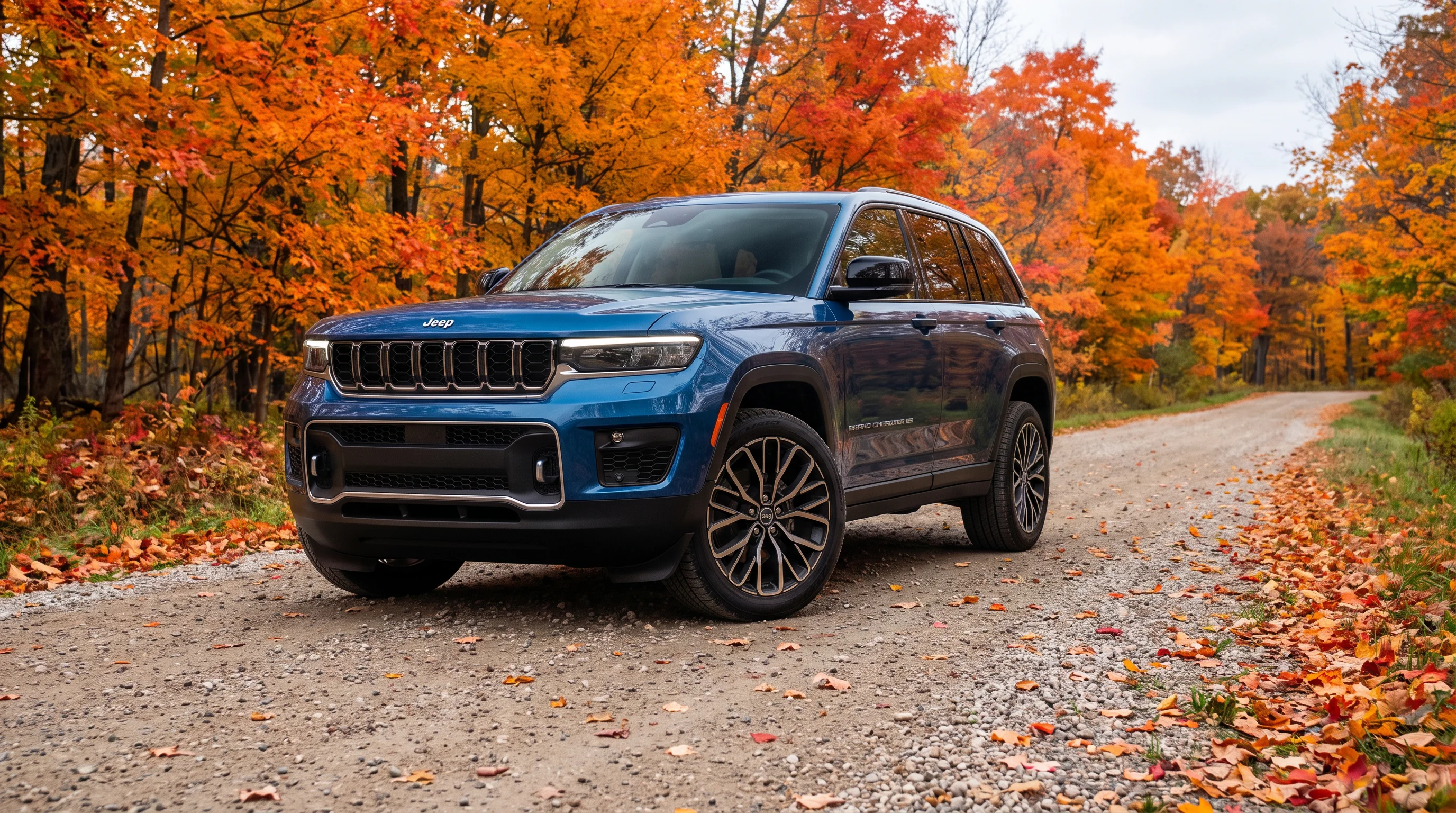
Your owner’s manual has the final word on rotation, and some vehicles have restricted patterns or cannot be rotated at all. Where no interval is specified, NHTSA and the U.S. Tire Manufacturers Association both recommend every 5,000 to 8,000 miles — for most drivers, that works out to every other oil change.
Staying on that schedule prevents uneven tread wear, keeps traction consistent across all four corners, and preserves balanced handling. If you drive an all-wheel-drive vehicle, a performance model, or something that regularly carries heavy loads, a tighter interval closer to 3,000 to 5,000 miles is usually the better fit.
Cited Source: NHTSA — Tires | U.S. Tire Manufacturers Association — Tire Care Essentials — rotation interval guidance.
How Often Should You Rotate Your Tires?
A front-wheel-drive vehicle asks a great deal of its front tires. They deliver engine power, handle every steering input, and absorb the majority of braking force — road cars run roughly 70 to 80 percent of their braking bias to the front axle. The result is predictable: front tires wear noticeably faster than rears, often at roughly twice the rate.
Rotation evens that out. Technicians use a specific pattern depending on the drivetrain — forward cross or X-pattern on front-wheel-drive vehicles, rearward cross or X-pattern on rear- and all-wheel-drive — so each tire spends time in different positions and encounters different forces over its life.
| Drivetrain | Standard Rotation Pattern | Typical Interval |
|---|---|---|
| Front-wheel drive | Forward cross or X-pattern | 5,000–8,000 miles |
| Rear-wheel drive | Rearward cross or X-pattern | 5,000–8,000 miles |
| All-wheel drive / 4WD | Rearward cross or X-pattern | 3,000–5,000 miles |
Pairing the rotation with a service visit you were already making is the easiest way to stay on schedule. One note worth keeping straight: oil change intervals on modern vehicles often run 7,500 to 10,000 miles, so on a long-interval vehicle “every oil change” can push past the 8,000-mile ceiling. Every other oil change works when your oil interval is around 5,000 miles — otherwise, track the rotation separately.
Cited Source: NHTSA — Tires — rotation interval guidance and tire safety fundamentals.
What Regular Rotation Actually Saves You
Because the front tires on a front-wheel-drive car wear at close to double the rate of the rears, skipping rotations doesn’t just wear one pair out early — it forces you to buy a set early. You replace the fronts while the rears still have meaningful tread left, and that unused rubber is money left on the table.
There’s a second cost that’s less obvious. When tread depth varies significantly between axles, the wheels turn at slightly different speeds for the same road speed. Electronic stability control and anti-lock braking systems compare wheel-speed signals constantly, and a persistent mismatch can produce false interventions or warning lights. On all-wheel-drive vehicles it’s more serious: the differentials and transfer case work continuously to compensate, which generates heat and accelerates wear on components that are expensive to replace.
¶ Driver-assist and safety systems are supplemental aids and are not a substitute for safe, attentive driving. Their effectiveness depends on weather, road, and traffic conditions and other factors. Always obey traffic laws and stay attentive to the road. See your owner's manual for system details and limitations.
Worth separating two problems that often get confused. Rotation neglect causes uneven tread depth front to rear. It does not cause cupping, feathering, or heavy edge wear — those are alignment and suspension faults with their own fixes.
Feathering points to a toe angle out of specification. One-sided edge wear points to camber, toe, or inflation. Cupping usually points to worn shocks, struts, or bushings, and an alignment alone won’t correct it. If you’re seeing any of those patterns, the tires are reporting a problem somewhere else in the vehicle — our Service & Parts department can diagnose which.
The information in this article is general guidance and does not constitute a specific diagnostic or repair recommendation for any individual vehicle. Repair and maintenance decisions should be made in consultation with a certified technician based on the specific condition of your vehicle.
Drivers around Mukwonago and the Town of Vernon, where county zoning still runs to agricultural parcels and large-acre lots, often cover a mix of road surfaces that shows up as uneven outer-edge wear. Mixed-surface driving makes staying on a rotation schedule more valuable, not less.
Cited Source: Tire Rack — tread-depth mismatch and drivetrain stress | NHTSA — Tires — tire maintenance and wear.
Reading Your Tire Sidewall and Checking Tread Depth
The alphanumeric code molded into your sidewall tells you exactly what the tire is. Reading it correctly is how you confirm a replacement matches the original load capacity, speed rating, and rim dimension. A standard code looks like P235/65R17 104H:
| Code Component | Technical Meaning |
|---|---|
| P | Passenger vehicle rating |
| 235 | Section width, 235 mm (sidewall to sidewall) |
| 65 | Aspect ratio — sidewall height equals 65% of section width |
| R | Radial tire construction |
| 17 | 17-inch wheel rim diameter |
| 104 | Load index — maximum weight the tire can carry |
| H | Speed rating — maximum sustained speed |
Match or exceed the load index and speed rating listed on your vehicle’s placard, which you’ll find on the driver’s door jamb.
Checking Tread Depth
The penny test is the quickest field check. Insert a U.S. penny into the deepest tread groove with Lincoln’s head upside down and facing you. If the top of his head stays covered by rubber, you have more than 2/32 inch of tread. If his entire head is visible, you’re at or below the legal minimum.
That minimum is written into state law. Wisconsin Administrative Code Trans 305.30(2) requires every tire to have at least 2/32 inch of tread depth in every major tire groove, measured at two points no less than 15 inches apart.
The same section also bars tread or sidewall cuts and snags longer than one inch that are deep enough to expose or damage the body cords, along with any bump, bulge, knot, or sidewall separation. And under Trans 305.30(5), a vehicle may not run tires of different size or construction on the same axle — worth knowing before you replace just one or two.
The legal minimum is not the safe minimum, and the difference matters in this climate:
| Remaining Tread | What It Means |
|---|---|
| 10/32"–11/32" | Typical new all-season passenger tire — winter and all-terrain tires start deeper |
| 6/32" or more | Strong wet and winter traction |
| 5/32" | All-season tires begin losing meaningful snow traction — replace before winter |
| 4/32" | Wet-weather traction is compromised — replacement threshold for rain |
| 2/32" | Legal minimum only — wet stopping distance is roughly double that of a new tire, and snow traction is effectively gone |
Most tires also carry built-in wear bars — narrow strips of smooth rubber across the tread grooves. When a wear bar sits flush with the surrounding tread, the tire is at 2/32 inch and is worn out. If you run dedicated winter tires, replace them at approximately 6/32 inch — they wear out for winter use well before they reach the all-season threshold.
Cited Source: Wisconsin Administrative Code Trans 305.30 — statutory minimum tread depth and measurement method | Wisconsin DOT — Vehicle Inspection, Chapter Trans 305 — tire condition requirements | Consumer Reports — How to Decode Tire Size and Other Data — sidewall code components | U.S. Tire Manufacturers Association — Tire Care Essentials — 2/32" replacement point, wear bars and the penny test | Tire Rack — new-tire depth and wet/snow replacement thresholds.
Are All-Weather Tires Right for Wisconsin Winters?
All-weather tires are a genuine third category, distinct from all-season, and they suit a lot of southern Wisconsin driving. They carry the Three-Peak Mountain Snowflake (3PMSF) symbol, which means the compound is engineered to stay flexible below 45°F and the tire has passed a severe snow service test that a standard all-season tire cannot pass.
That 45°F figure is the real dividing line. Standard all-season compounds begin to stiffen below it, losing the ability to conform to cold pavement. All-weather tires counter that with high-silica compounds and high-density siping — the fine interlocking slits cut into the tread blocks.
| Feature | Standard All-Season | All-Weather | Dedicated Winter |
|---|---|---|---|
| Flexibility below 45°F | Moderate | High | Maximum |
| 3PMSF Snow Rating | No (M+S at best) | Yes | Yes |
| Year-Round Usability | Yes | Yes | No (winter only) |
| Warm Weather Wear | Normal | Faster than all-season | Rapid degradation |
The trade-off is real and worth naming: all-weather tires give up some tread life on hot summer pavement, which is why they’re typically warrantied in the 40,000 to 60,000 mile range rather than longer. It’s also worth knowing what the 3PMSF test does and doesn’t measure — it’s an acceleration test on medium-packed snow. It does not test ice, and it does not test braking. Dedicated winter tires still hold the advantage on ice and in deep, unplowed snow.
For drivers commuting between Mukwonago, Muskego, and New Berlin who don’t want to store and swap a second set of wheels twice a year, all-weather is the practical middle ground.
Cited Source: Tire Review — All-Season vs. All-Weather Tires — category differences, 3PMSF certification, and warm-weather wear trade-offs.
Where to Buy New Tires and Get a Rotation in Mukwonago
Lynch Mukwonago operates three service centers in one town. The Chevrolet store sits at 280 E Wolf Run, the Chrysler, Dodge, Jeep and Ram store is next door on the same campus, and the Ford store is on Main Street — so whichever badge is on your vehicle, the right technicians and the right parts are a few minutes apart.
All three handle tire sales, mounting, wheel balancing, alignment, and tread inspection, and our Parts Center stocks what the technicians need to finish the job. If you’re weighing a dealership against a tire retailer, we covered that comparison in our guide to buying tires from a dealership. And if you’re not sure which location serves your vehicle, our service locations page routes you to the right one.
Common Questions About Tire Care
How long does a tire rotation take?
Plan on 30 to 45 minutes for a typical visit. The rotation itself is usually 15 to 30 minutes of bay time; the rest depends on how busy the shop is. Pairing it with a scheduled oil change or multi-point inspection gets more done in a single stop.
What causes tires to wear rapidly on the inner or outer edges?
Rapid wear on a single edge points to wheel alignment angles or worn suspension components — not to a missed rotation. When camber or toe settings drift out of factory specification, friction concentrates along one side of the tread, and a precision four-wheel alignment is what resolves it.
Why does the tire pressure warning light come on when cold weather arrives?
Air contracts as temperature drops, lowering pressure by roughly 1 PSI for every 10-degree Fahrenheit decrease in outside temperature. Check inflation when the tires are cold — meaning the vehicle has been parked at least three hours — and add air to match the pressure listed on the driver’s door jamb placard, not the maximum printed on the sidewall.
Do I need to replace all four tires at once on an all-wheel-drive vehicle?
All-wheel-drive systems need uniform rolling diameters across all four wheels. Installing one new tire alongside three worn ones creates a diameter difference that stresses the transfer case and differentials. Most manufacturers hold the tolerance to 2/32 inch of tread depth variance across the set — beyond that, replace all four.
How does tire inflation affect fuel economy?
Underinflated tires increase rolling resistance, forcing the engine to work harder to maintain speed. Keeping tires at the cold pressure specified on the driver’s door jamb reduces that drag and helps protect your EPA-estimated fuel economy.
‡ EPA-estimated fuel economy figures are for comparison purposes only. Your actual mileage will vary depending on driving conditions, how you drive and maintain your vehicle, battery age/condition, and other factors.
Cited Source: NHTSA — Tires — inflation checking procedure, cold tire definition, and rolling resistance.
Schedule Tire Service at Lynch Mukwonago
Staying on a rotation schedule protects your tire investment, keeps stopping power consistent, and prevents the uneven wear that forces an early replacement set. Checking tread depth before winter costs nothing and tells you whether your tires are ready for the season ahead.
Our technicians handle the full range of tire service across all three Mukwonago locations — rotations, balancing, alignment, and complete replacement sets matched to your vehicle’s load and performance requirements.
Disclaimers
‡ EPA-estimated fuel economy figures are for comparison purposes only. Your actual mileage will vary depending on driving conditions, how you drive and maintain your vehicle, battery age/condition, and other factors.
¶ Driver-assist and safety systems are supplemental aids and are not a substitute for safe, attentive driving. Their effectiveness depends on weather, road, and traffic conditions and other factors. Always obey traffic laws and stay attentive to the road. See your owner's manual for system details and limitations.
The information in this article is general guidance and does not constitute a specific diagnostic or repair recommendation for any individual vehicle. Repair and maintenance decisions should be made in consultation with a certified technician based on the specific condition of your vehicle.
Cited Sources
NHTSA — Tires | Wisconsin Administrative Code Trans 305.30 | Wisconsin DOT — Vehicle Inspection, Chapter Trans 305 | U.S. Tire Manufacturers Association — Tire Care Essentials | Consumer Reports — How to Decode Tire Size and Other Data | Tire Review — All-Season vs. All-Weather Tires | Tire Rack